Why RBAC Matters in Admin Dashboards
Hiding a button is not security. Here is how I structure CUSTOMER / STAFF / ADMIN roles so mutations stay safe.
By SR Rony
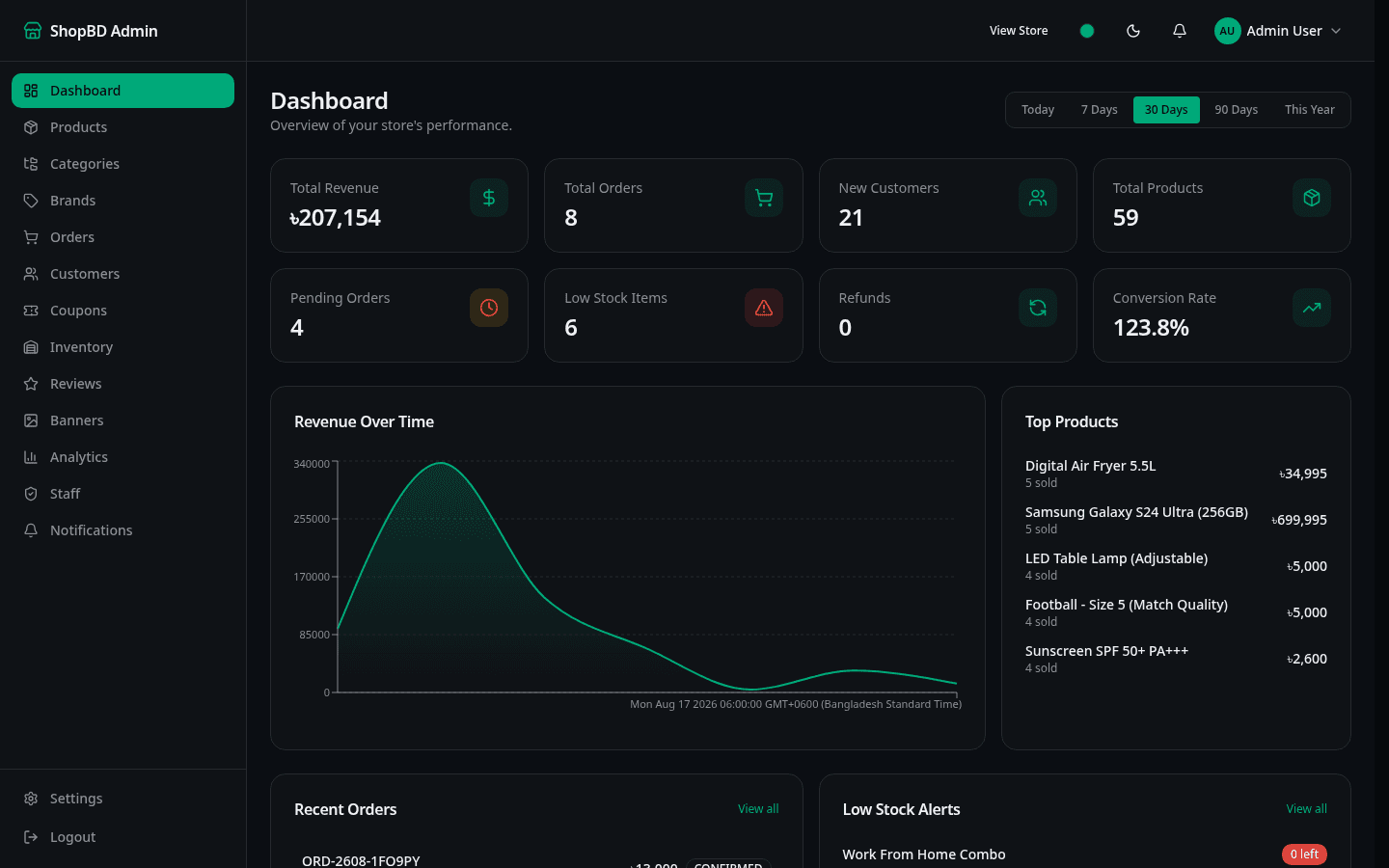
Most dashboards start with a single admin login. That works until a marketing teammate needs coupons and an ops teammate needs orders — then you either share one password or ship a messy permission model.
Role-based access control (RBAC) keeps those paths clean:
- ▸CUSTOMER can manage their own account and orders
- ▸STAFF gets scoped permissions (products, orders, marketing)
- ▸ADMIN owns users, settings, and audit logs
The important part is not the UI. Every Server Action should call requirePermission() again. Middleware and menu visibility are convenience layers — the database write is the real boundary.
On ShopBD and similar builds, I also keep an audit log of admin mutations. When something changes in production, you want to know who did it and when.
Want to build something similar?
I help teams ship full-stack web and mobile products end-to-end.